Borredà
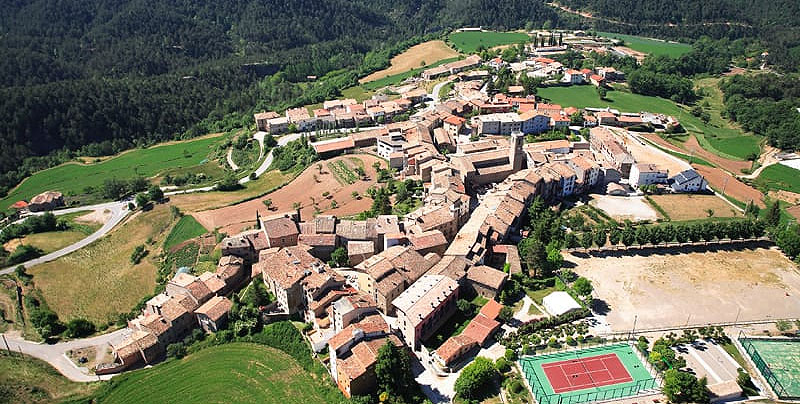
This municipality of the Berguedà is surrounded by nature, culture and history. Borredà grew up around the parish church of Santa Maria, and the village is ringed by three protected areas: the Picancel range, the Catllaràs range and the Merlès stream.
From this spot you can set out on foot, on horseback or by bicycle, go climbing or caving, practise water sports on the Baells reservoir or fish in its streams. Endless possibilities in an outstanding natural setting.
Among its main places to visit are the Romanesque church of Rotgers (11th and 12th centuries) and the gorgs of the Mergançol river.
And if you enjoy picking mushrooms, these woods will fill your basket in season.
The place and the church of Borredà are first mentioned in the year 886, in a lawsuit between Count Guifré el Pilós and Bishop Esclua that was settled in the count's favour; the witnesses declared that thirty years earlier a man called Sarrazino had bought that church and had worked the wastelands of Borredà. In the early 10th century Santa Maria de Borredà appears again as a boundary in the consecration deed of Sant Jaume de Frontanyà, and in 938 King Louis confirmed the place to the monastery of Santa Maria de Ripoll.
Borredà is also the birthplace of General Josep Manso i Solà (1785-1863), who started out as a miller and became one of the best-known Catalan soldiers of the Peninsular War.
Historic centre of Borredà
The natural environment that surrounds Borredà blends perfectly with a beautiful historic centre that has always grown around the church and bell tower of Santa Maria. Its cobbled centre is a reflection of its inhabitants and their activities such as agriculture, livestock and forestry. The centre of Borredà offers a lovely walk to get to know this small town between the Berguedà, the Ripollès and Osona.

The Capdevila and El Pati farmhouses
North of the village, between Borredà and Vilada, lies the Capdevila estate, documented from the 16th century as one of the properties of the monastery of Santa Maria de Ripoll and listed in the Architectural Heritage Inventory of Catalonia. The Capdevila family combined farming with working wool and joined the Guild of Wool Carders and Weavers of Borredà; by the 18th century they were recorded as wholesale wool merchants. Near the house stands their family chapel, dedicated to Sant Jaume. The farmhouse was restored between 1990 and 1995 and is today a private home: it cannot be visited and there is no access.
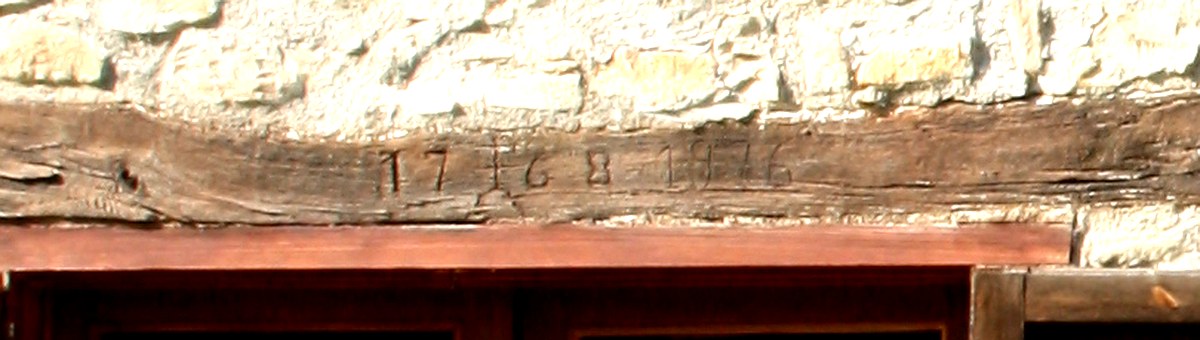
Inside that same estate, on the lower ground, the El Pati farmhouse was built in 1768, with the year carved into the lintel above the door. Family tradition tells that the master of Capdevila had it built for a daughter who married one of the farmhands, and that is where the name comes from.
Capdevila and El Pati are not alone: the valley is completed by Casteió, today a ruin on top of the hill, Canemars, les Eres de Guardiolans and Pradell. All of them belonged to a parish that no longer exists, Santa Magdalena de Guardiolans, documented from the year 996.
The history of the El Pati farmhouse The neighbouring farmhouses

Sant Jaume de Frontanyà
One of the smallest villages in Catalonia, in a privileged natural enclave. Located in the Berguedà region, Sant Jaume de Frontanyà is surrounded by tributaries of the Merlès stream.
Its Romanesque church, from the late 11th century, was the seat of a community of canons between 1140 and 1592; it was declared a monument in 1931 and is now a National Cultural Asset. The village stands at 1,072 m, surrounded by pine woods and pastures, and is the end point of our route across the Catllaràs range.
Rotgers Romanesque Church
Sant Sadurní de Rotgers is found after passing Borredà, towards Sant Jaume de Frontanyà. This church was declared a Historic-Artistic Monument and is documented from the 10th century, but no trace of the building from that early period is preserved. The current buildings belong to the 11th and 12th centuries.
It is a small church, with a single nave and a pointed vault. The altar frontal is preserved in the Episcopal Museum of Vic and shows a passage from the life of Sant Sadurní. It can be visited by appointment.


The Mergançol river, its gorgs and its mills
The Mergançol runs down the floor of the Borredà valley in a chain of pools, weirs and waterfalls. The best known is the Gorg del Salt, a large pool fed by a waterfall some twenty metres high, signposted and easy to reach from the road. But there are many more, most of them with no signs at all.
For four centuries this river was also the only source of power the village had: along its banks stand nine flour and fulling mills and the stone bridges that were built to reach them.
Merlès stream
The Riera de Merlès is a small river that descends from the Catalan mountain range of Catllaràs, passing through three counties: Bages, Osona and Berguedà.
The Merlès stream is an area of natural interest in the Berguedà. In summer you can enjoy a good swim looking for pools and corners along its banks, and take in its beautiful waterfalls. It is an ideal spot to spend a pleasant day with friends and family.
Unlike the Mergançol, public use of the Merlès stream is regulated by a municipal ordinance, with stretches where bathing is forbidden. Check the signs before getting into the water.

Serra del Catllaràs
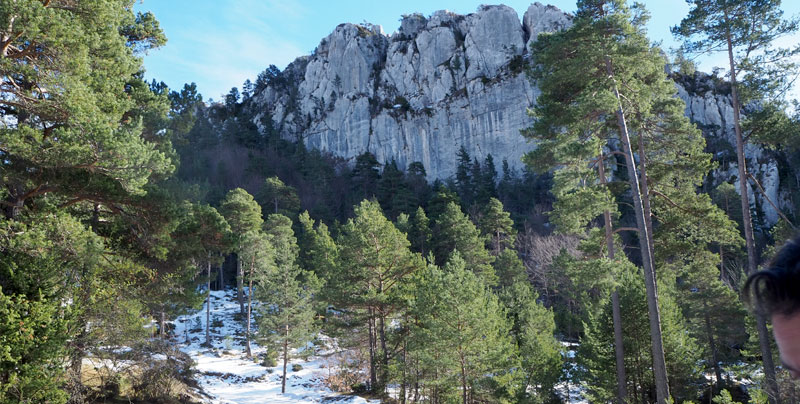
This protected mountain range with great scenic value is full of routes to be followed on foot. Its highest summits, such as the Pedró, rise above 1,750 metres, and it is covered in spectacular dense forests. The Catllaràs range is home to deer and a place loved by hikers.
From the Catllaràs you can see the Pedraforca and the Cadí-Moixeró to the north, and Vallfogona too. At its northern end lies the Falgars range, on the south bank of a young Llobregat river.
In this spectacular range you will find a great diversity of trees: oak and pine woods occupying the sunny slopes and the valley bottoms, and beech in the shadier areas.
It is a passage area for many animals: deer, capercaillie and marten among them. Hikers can walk the GR 4 and GR 241 trails that cross the range.
We have travelled the range from end to end, from Castell de l'Areny to Sant Jaume de Frontanyà, by way of Sant Romà de la Clusa, the Roc de Catllaràs and the Ardericó refuge: guide to the Serra del Catllaràs.
Baells Reservoir
This Berguedà reservoir is formed by a dam at Cercs, on the Llobregat river, and makes its way between the pre-Pyrenean ranges of Catllaràs to the east and Figuerassa and Arades to the west. The C-16 road runs along its right bank, between the Cadí tunnel and Berga-Manresa, and it is crossed by the C-26, the road linking Berga and Ripoll.
The reservoir is a beautiful spot for water sports: canoeing, kayaking, water skiing, or just taking a dip.
Several adventure companies operate here, offering their services to visitors.
It is also a perfect place to spend the day, eat on the riverbank or walk the paths around it.


Picancel range
This is an extensive geological area of natural interest with jagged conglomerates and deep valleys as well as extensive forests.
The Picancel range is highly appreciated by hikers and mushroom pickers, and is also popular with mountain bikers.
Its heritage includes the monastery of Sant Pere de la Portella, the sanctuary of Santa Maria de la Quar and the Romanesque chapel of Sant Miquel de les Canals.
We have a guide to the Picancel range with 26 geolocated points, access by car and on foot, and our own photographs.
Where to stay in Borredà
Our four properties in Borredà are rented whole, never shared with other guests, and pets are welcome at no extra cost. The farmhouse is on the outskirts, between Vilada and Borredà; the three apartments are in the village.
- Masia El Pati: a farmhouse dating from 1768 with 6 bedrooms, 20 beds, a swimming pool and 1,000 m² of garden, between Vilada and Borredà.
- Apartment ideal for couples: an open-plan space with a large window and a fireplace, for 2 or 4 people.
- Charming rural apartment: with air conditioning, a dishwasher and a chill-out area.
- Cal Barraqué de Dalt triplex: three floors for groups and large families, with a wood-burning stove.
Frequently asked questions about rural tourism in Borredà
Which historic farmhouses are there in Borredà?
The best known is Capdevila, documented from the 16th century as a property of the monastery of Santa Maria de Ripoll and listed in the Architectural Heritage Inventory of Catalonia, with its family chapel dedicated to Sant Jaume. Inside the same estate stands the El Pati farmhouse, built in 1768, with the year carved into the lintel above its front door.
What can you visit in Borredà?
The parish church of Santa Maria and its bell tower, the cobbled historic centre, the Romanesque church of Sant Sadurní de Rotgers (11th and 12th centuries), the gorgs of the Mergançol river and the mills and bridges of the same river. Sant Jaume de Frontanyà and the Baells reservoir are both a few minutes away.
Where are the waterfalls and pools to swim in?
On the Mergançol river, which runs below the village. The best known is the Gorg del Salt, with a waterfall of about twenty metres, signposted from the road. We have gathered ten gorgs with their accesses on a page of their own.
What outdoor activities are there?
Walking, horse riding and mountain biking in the Picancel and Catllaràs ranges, climbing, caving, fishing in the streams and water sports on the Baells reservoir. In season, the area is excellent for picking mushrooms.
How far is Borredà from Barcelona?
A little over an hour and a half by car. Borredà sits at about 850 metres of altitude in the upper Berguedà, north of the province of Barcelona, bordering the Ripollès and Osona regions.
Can it be visited all year round?
Yes. The area is lovely in every season: spring and autumn for walking, summer for the river pools, and winter for the fireplace back at your stay.
Where to stay in Borredà?
We run four properties in Borredà: the El Pati farmhouse, on the outskirts between Vilada and Borredà; the apartment for couples on Carrer Manresa; and, on Carrer de la Font, the Cal Barraqué de Baix apartment and the Cal Barraqué de Dalt triplex, for groups and large families. All are rented whole and pets are welcome at no extra cost.