A miller from the Berguedà who ended up in the Senate
Josep Manso i Solà was born in Borredà in 1785 and died in Madrid in 1863. Between those two dates he went from working in mills to commanding a battalion against Napoleon's army, and from there to lieutenant general, captain general of several regions, senator for life and Count of Llobregat.
In Spanish he is known as José Manso y Solá, and in many Catalan towns simply as "General Manso", because that is what the streets named after him are called. In Borredà itself his memory is discreet: a street bearing his name and the family farmhouse, on the path to the Coll d'en Bas.
This page sums up what is documented about him. Every fact comes from one of the sources listed at the end, and where they disagree on a date we say so or leave it out.
Text prepared by Josep Heras Gomis, who has a house at the masia del Pati in Borredà, from the sources cited at the foot of the page. Last revised: September 2026.
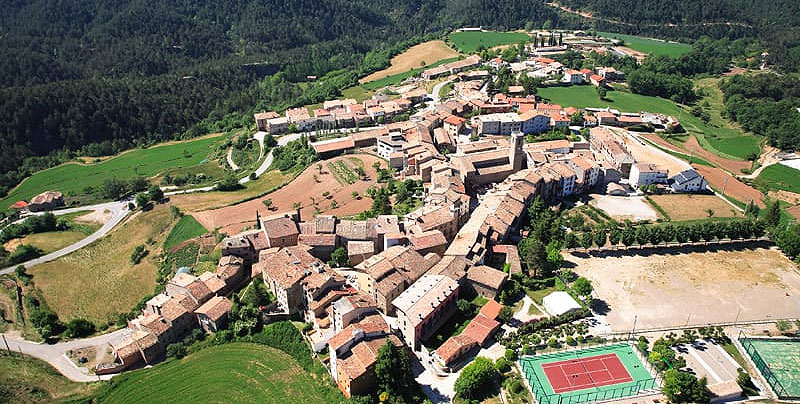
Origins: a Borredà family and a string of mills
The entry for Cal Manso on the Diputació de Barcelona's Cultural Heritage Map explains that the Manso family lived in Borredà and made a living from textile crafts, and that Josep Manso i Solà was a son of that house. It fits what Borredà was in the eighteenth century: a village where wool and the water of the Mergançol kept many families in work.
Before he was a soldier, Manso was a miller. According to the local history of the Baix Llobregat, he worked first at the Santa Creu mill in Borredà, then at Can Villaura in the parish of Ripoll, and later at the Verneda mill, by then in Barcelona. Anyone who has walked past the mills and bridges of the Mergançol will understand the world he came from.
Several sources agree that he married an heiress from Cornellà de Llobregat. Through her he came to the Can Manso farmhouse in Cornellà, where, according to Wikipedia, he spent periods of time from 1847 onwards.
General Manso: a timeline
| Year | Event | Source |
|---|---|---|
| 1785 | Born in Borredà (Berguedà) | Wikipedia, Sabarca, carrers.barcelona |
| Before 1808 | Miller at Santa Creu (Borredà), Can Villaura (Ripoll) and the Verneda (Barcelona) | Sabarca, Wikipedia |
| 1808 | Joins the army as a lieutenant of miquelets | Sabarca |
| 1809 | Captain of a company he himself helped to fund | Sabarca |
| 1808-1814 | Guerrilla fighter in the Baix Llobregat; commands the Volunteer Chasseurs Battalion of Catalonia | Wikipedia, Sabarca |
| 1813 | Assault on Pallejà castle, on 10 September | Sabarca |
| 1814 | Governor of the Citadel of Barcelona | Wikipedia |
| 1828 | Governor of Málaga | Wikipedia |
| Mid-1830s | Lieutenant general (sources give 1834 or 1835) | Sabarca, Wikipedia |
| 1837 | Put in charge of the defence of Madrid against the Carlist Royal Expedition | Wikipedia |
| 1844 | Senator for the province of Barcelona (appointed 16 October) | Spanish Senate |
| 1844-1845 | Count of Llobregat and Viscount of Montserrat (sources give 1844 or 1845) | Wikipedia, carrers.barcelona |
| 1845 | Senator for life (appointed 15 August) and captain general of Aragon | Spanish Senate, Wikipedia |
| 1846-1847 | Captain general of Valencia | Wikipedia, carrers.barcelona |
| 1847 | Captain general of New Castile | Wikipedia, carrers.barcelona |
| 1863 | Dies in Madrid on 22 March | Wikipedia, Dades dels Països Catalans |
| 1863 | Barcelona names Carrer de Manso after him, approved on 19 December | carrers.barcelona |
| 1866 | Verdaguer wins an accessit at the Jocs Florals with a poem dedicated to him | Institut d'Estudis Catalans |
Where two sources give different years for the same event, the table says so. Full references are at the end of the page.
The Peninsular War: the guerrilla of the Llobregat
When the war broke out, Manso was living in the Verneda. In 1808 he joined the army with the rank of lieutenant of miquelets, and the following year he was already captain of a company he had helped to pay for himself. His field of action, according to the local history of the Baix Llobregat, was above all the right bank of the Llobregat river, between Martorell and Molins de Rei.
He is credited with capturing 34 French soldiers together with the carriage and servants of the French general Duhesme. He fought at the bridge of Molins de Rei, at Sant Boi and on the Torretes mountain, and on 10 September 1813 he stormed Pallejà castle, which held a sizeable French garrison. Wikipedia adds Vic, Martorell, Sant Andreu de la Barca, Altafulla, Vila-seca and Olot to the list of places where he fought.
During the war he rose to lieutenant colonel and ended up at the head of the Volunteer Chasseurs Battalion of Catalonia. He was awarded the Laureate Cross of Saint Ferdinand. When the conflict ended, in 1814, Ferdinand VII received and congratulated him in person, and that same year he was appointed governor of the Citadel of Barcelona.
After the war: governor, captain general and senator
His later career did not run in a straight line. He was governor of Hostalric castle in 1820. During the Liberal Triennium, when the Hundred Thousand Sons of Saint Louis entered Spain, he sided with the liberals and fought the French troops, although when the constitutional regime fell he ended up surrendering to the royalists. In 1827, on the orders of the captain general of Catalonia, he put down the Malcontents revolt.
In 1828 he was appointed governor of Málaga and later of Cádiz. In the First Carlist War (1833-1840) he fought on the Isabelline side, and in the mid-1830s he reached the rank of lieutenant general; the sources disagree between 1834 and 1835. In 1837 he was entrusted with the defence of Madrid against the Royal Expedition, the Carlist attempt to take the capital.
The 1840s were the decade of honours. The Senate keeps his file: he was appointed senator for the province of Barcelona on 16 October 1844 and senator for life on 15 August 1845, a seat he held until his death. In those same years he received the titles of Count of Llobregat and Viscount of Montserrat, and was successively captain general of Aragon (1845), Valencia (1846-1847) and New Castile (1847). The title refers to the Llobregat, the river on whose banks he had fought as a guerrilla.
He died in Madrid on 22 March 1863.
His memory: streets, a poem by Verdaguer and a portrait
A few months after his death, on 19 December 1863, Barcelona approved giving his name to a street in the Eixample, today's Carrer de Manso, between the Sant Antoni market and Avinguda del Paral·lel, which in the Cerdà plan was simply called "Lletra R". Wikipedia notes that many Catalan towns also have a street dedicated to him, and a glance at a street map turns up General Manso streets in Sant Feliu de Llobregat, Cornellà de Llobregat and L'Hospitalet de Llobregat, close to where he fought.
Jacint Verdaguer dedicated to him the poem "A l'hèroe montanyès En Josep Manso", which earned an accessit for the golden carnation prize at the 1866 Jocs Florals. Years later the poet included it, under the shorter title "Manso", in his book Pàtria (1888). His portrait, painted posthumously, also hangs in the Galeria de Catalans Il·lustres of Barcelona City Council, according to Wikipedia.
What you can see in Borredà today
We have found no record of any museum or monument to the general in Borredà. What there is, is two concrete traces:
- Cal Manso. This is the family farmhouse, listed on the Diputació de Barcelona's Cultural Heritage Map under entry 08024-55. It stands on the path that runs from the centre of Borredà to the Coll d'en Bas. It is a house of classic layout, with a gabled roof whose ridge runs perpendicular to the façade, which faces south; on the first floor there are two openings with wooden balconies and on the ground floor two round stone arches. It is documented from the eighteenth century and was lived in by farming families who held the land on emphyteutic lease from the monastery of Ripoll. The entry links it to the general as his family's house, but does not state that he was born there. It is a private home: you see it from the path and you do not visit it.
- Carrer General Manso. The street map of Borredà includes a street bearing his name.
Nor have we found any source documenting a commemorative plaque or a signposted birthplace, so we do not take them as given.
How it fits into a visit to Borredà and where to stay
Manso's story makes more sense on the ground. Cal Manso lies on the path leading out of the village towards the Coll d'en Bas, and the street that bears his name is in Borredà itself. You can plan a morning that starts in the village and then goes down to the gorgs of the Mergançol, or follows the trail of the mills and bridges of the Mergançol, the world of millers and wool-dressers the general came from. For everything else in the area, see the Around Borredà page.
Our three places to stay in Borredà are a few minutes from the village centre, are let whole and take pets at no extra cost:
- Masia El Pati: a farmhouse of 1600 with 6 bedrooms, 20 beds, a swimming pool and 1,000 m² of garden.
- Apartment ideal for couples: open-plan, with a large window and a fireplace.
- Charming rural apartment: with air conditioning and a chill-out area.
Frequently asked questions about General Manso
Who was General Manso?
Josep Manso i Solà (José Manso y Solá in Spanish) was a Catalan soldier born in Borredà in 1785 who died in Madrid in 1863. He made his name as a guerrilla fighter in the Peninsular War and rose to lieutenant general, captain general, senator for life and Count of Llobregat.
Where was Josep Manso i Solà born?
In Borredà, in the Berguedà district, in 1785. His family lived in the village and worked in textile crafts; the family farmhouse, Cal Manso, still stands on the path to the Coll d'en Bas.
What is his connection with the Llobregat?
It was in the Baix Llobregat, above all between Martorell and Molins de Rei, that he fought as a guerrilla against Napoleon's troops. In the mid-1840s he received the titles of Count of Llobregat and Viscount of Montserrat.
What did he do in the Peninsular War?
He joined the army in 1808 as a lieutenant of miquelets, was a captain by 1809 and ended up commanding the Volunteer Chasseurs Battalion of Catalonia. His actions include the capture of General Duhesme's carriage and the assault on Pallejà castle in 1813. He was awarded the Laureate Cross of Saint Ferdinand.
What is there to see in Borredà connected with him?
Cal Manso, his family's farmhouse, on the path from the village to the Coll d'en Bas, and Carrer General Manso. Cal Manso is a private home and is seen from the path. We have found no record of any plaque or signposted birthplace.
Are there other streets named after General Manso?
Yes. Barcelona has had Carrer de Manso since December 1863, between the Sant Antoni market and the Paral·lel, and there are General Manso streets in other towns such as Sant Feliu de Llobregat, Cornellà de Llobregat and L'Hospitalet de Llobregat.
Sources
- José Manso y Solá, Spanish-language Wikipedia.
- Senator's file of José Manso y Solá, Count of Llobregat, Spanish Senate.
- Cal Manso. Borredà, Cultural Heritage Map, Diputació de Barcelona.
- Josep Manso i la guerra del Francès (1808-1814) al Baix Llobregat, Sabarca.
- Carrer de Manso, carrers.barcelona.
- Jacint Verdaguer i els Jocs Florals, Institut d'Estudis Catalans (PDF).
- Història del meu carrer: Josep Manso, militar català del segle XIX, Zona Sec.
- 22 de març, Dades dels Països Catalans.